
PC (Polycarbonate) - Durable and Transparent Engineering Plastics
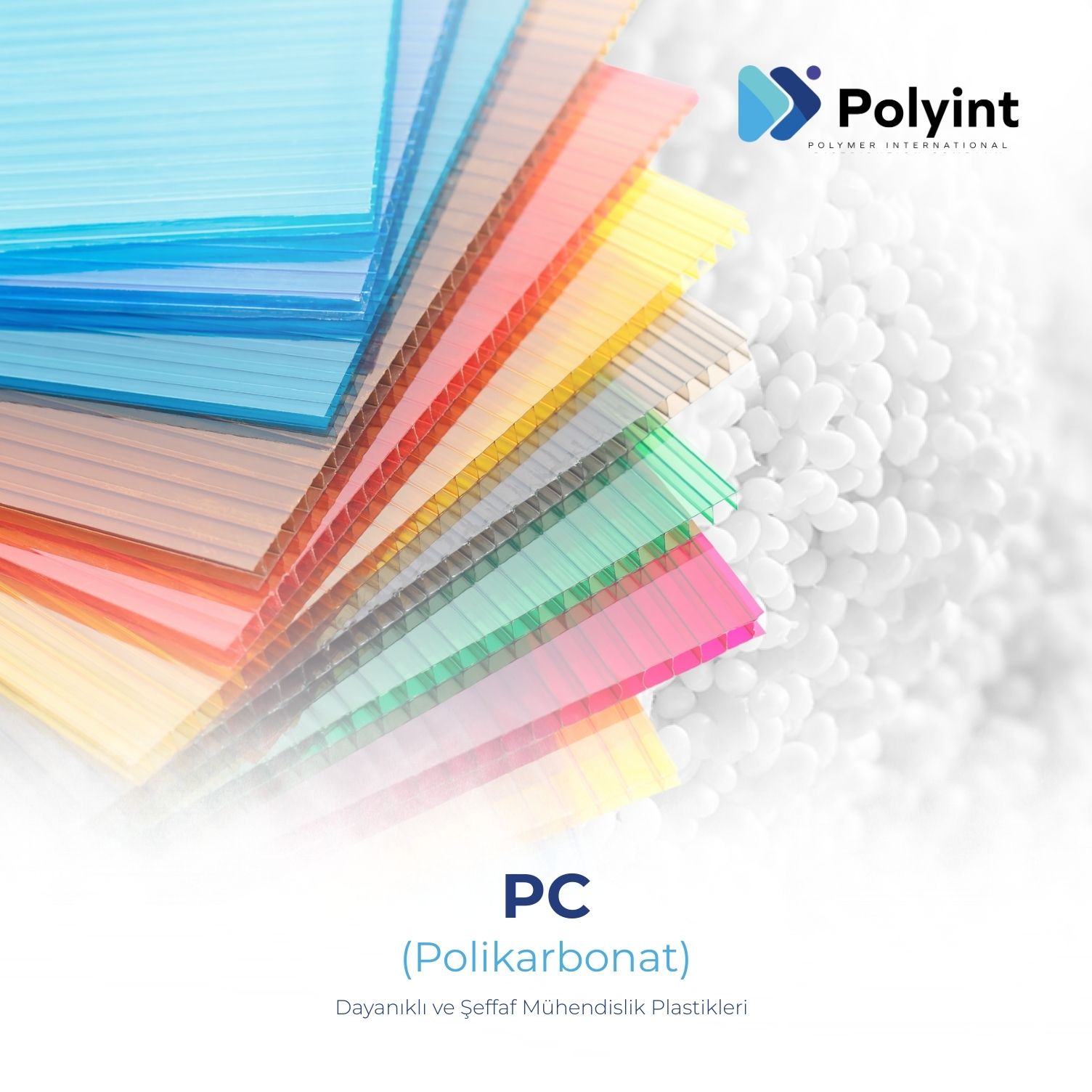
PC (Polycarbonate) is a material recognized for its high impact resistance, high temperature resistance, and optical transparency. It maintains excellent durability even at low temperatures and stands out as an important alternative to glass in transparent materials.
PC has a wide range of applications in the automotive, electronics, construction, optical, and security industries. Its aesthetic structure and long lifespan make it a preferred material for both indoor and outdoor applications.
Technical Specifications
- Density: Approximately 1.20 g/cm³
- Melting Temperature: 250 – 270°C
- Tensile Strength: 60 – 70 MPa
- Izod Impact Strength: Very High
- Color Options: Transparent, opaque, special colors
Applications
Polycarbonate is commonly used in various industrial applications where high impact resistance and transparency are required. Below are the main areas where PC is used:
- Automotive glass and headlights
- Electronic device screens and protective covers
- Construction materials replacing glass
- Optical lenses and eyeglass lenses
- Ventilation systems and transparent panels
- Safety glass and ballistic protection materials
Advantages
- Extremely impact-resistant, making it highly resistant to breakage
- Offers a safe alternative to glass due to its transparency properties
- High temperature resistance, making it suitable for outdoor applications
- Provides excellent optical properties with high light transmission
- Easy to process and shape, facilitating manufacturing processes
- Versions with UV resistance are available
Additional Information
Polycarbonate belongs to a polymer class known for its carbonates bonds and very high strength. Its superior durability compared to glass and ease of processing make it a standout among engineering plastics. Versions resistant to UV rays are ideal for outdoor use.
PC maintains its durability even at low temperatures and is not as brittle as glass. Additionally, it is a material that can be shaped in various forms and sizes, making it highly efficient for industrial production processes. With its high optical quality, it is preferred for sensitive applications such as eyeglass lenses.