
PA (Polyamide) – High-Performance Engineering Thermoplastic
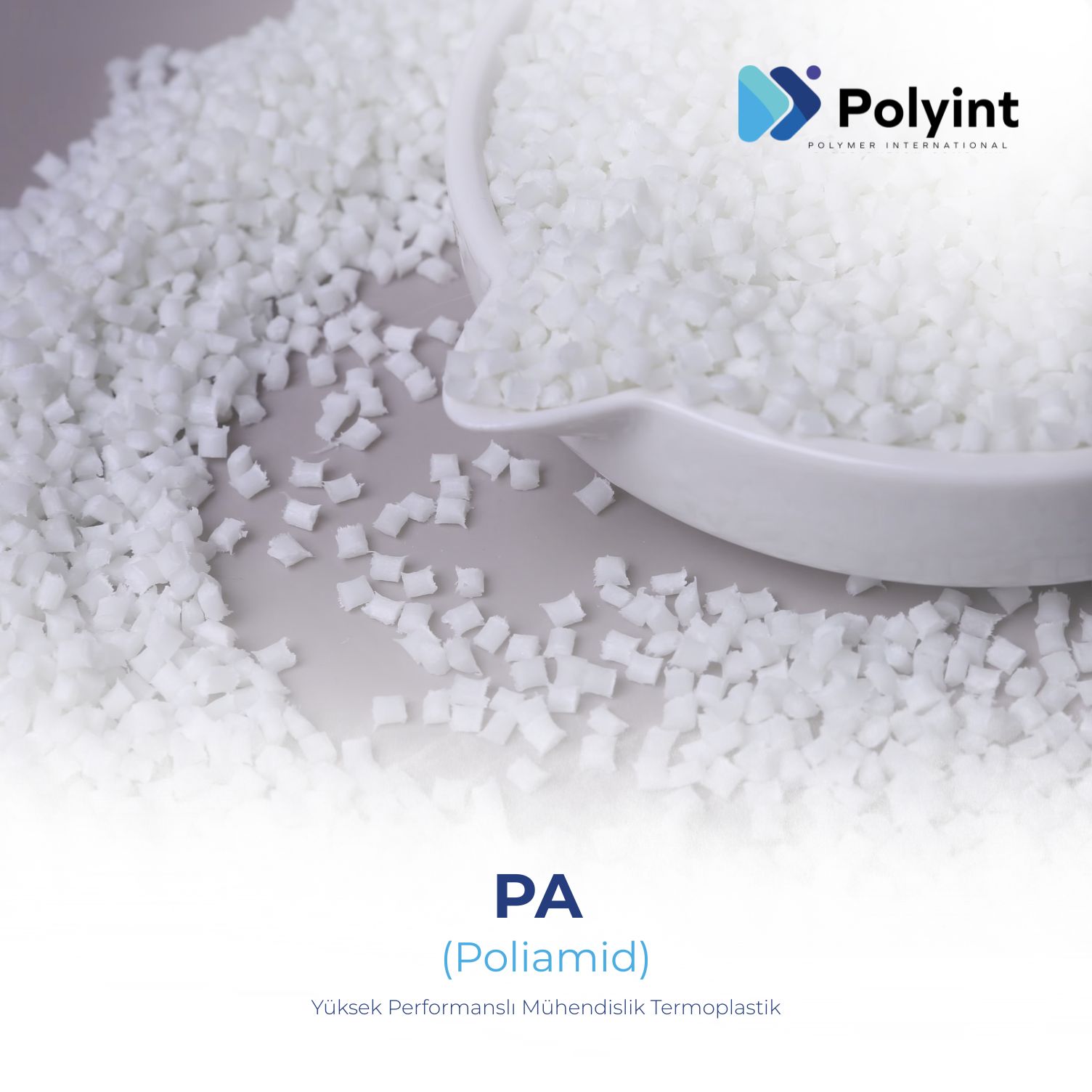
PA (Polyamide), commonly known as nylon, is one of the engineering thermoplastics known for its high strength, wear resistance, and mechanical durability. It is widely used especially in automotive, electrical-electronic, and industrial applications.
Polyamides can be processed by injection molding and extrusion methods. Due to their moisture absorption properties, drying may be required in certain special applications. PA offers long-term performance by resisting both heat and chemicals.
Technical Specifications
- Density: Approximately 1.13 – 1.15 g/cm³ (high mechanical strength)
- Melting Temperature: 210 – 265°C (varies for PA6 and PA66)
- Tensile Strength: 60 – 80 MPa (high structural strength)
- Wear Resistance: Very high (excellent resistance to friction)
- Color Options: Natural (transparent), black, custom colors
Applications
PA is widely used in areas requiring high performance:
- Automotive parts (radiator fans, fittings, engine components)
- Electrical and electronic components (wiring parts, connectors)
- Industrial machines and equipment (gears, bushings, bearings)
- Sports equipment and textile accessories (ropes, zippers, ski bindings)
- Kitchen utensils (spoons, spatulas, blender parts)
- Air filter systems, fuel and oil systems
Advantages
- High mechanical strength makes it durable and long-lasting
- High resistance to wear and friction
- Resistant to chemicals and oils
- Withstands high temperatures and offers heat stability
- Low coefficient of friction makes it ideal for moving parts
- Good electrical insulation properties
Additional Information
PA products include subtypes such as PA6, PA66, and PA12, each offering different technical characteristics. Glass fiber-reinforced versions enhance impact resistance while reducing the coefficient of thermal expansion.
Due to PA’s moisture absorption characteristics, pre-drying may be required especially in applications requiring precise tolerances. Furthermore, high-temperature versions (HTPA) allow reliable use even in more demanding industrial conditions.